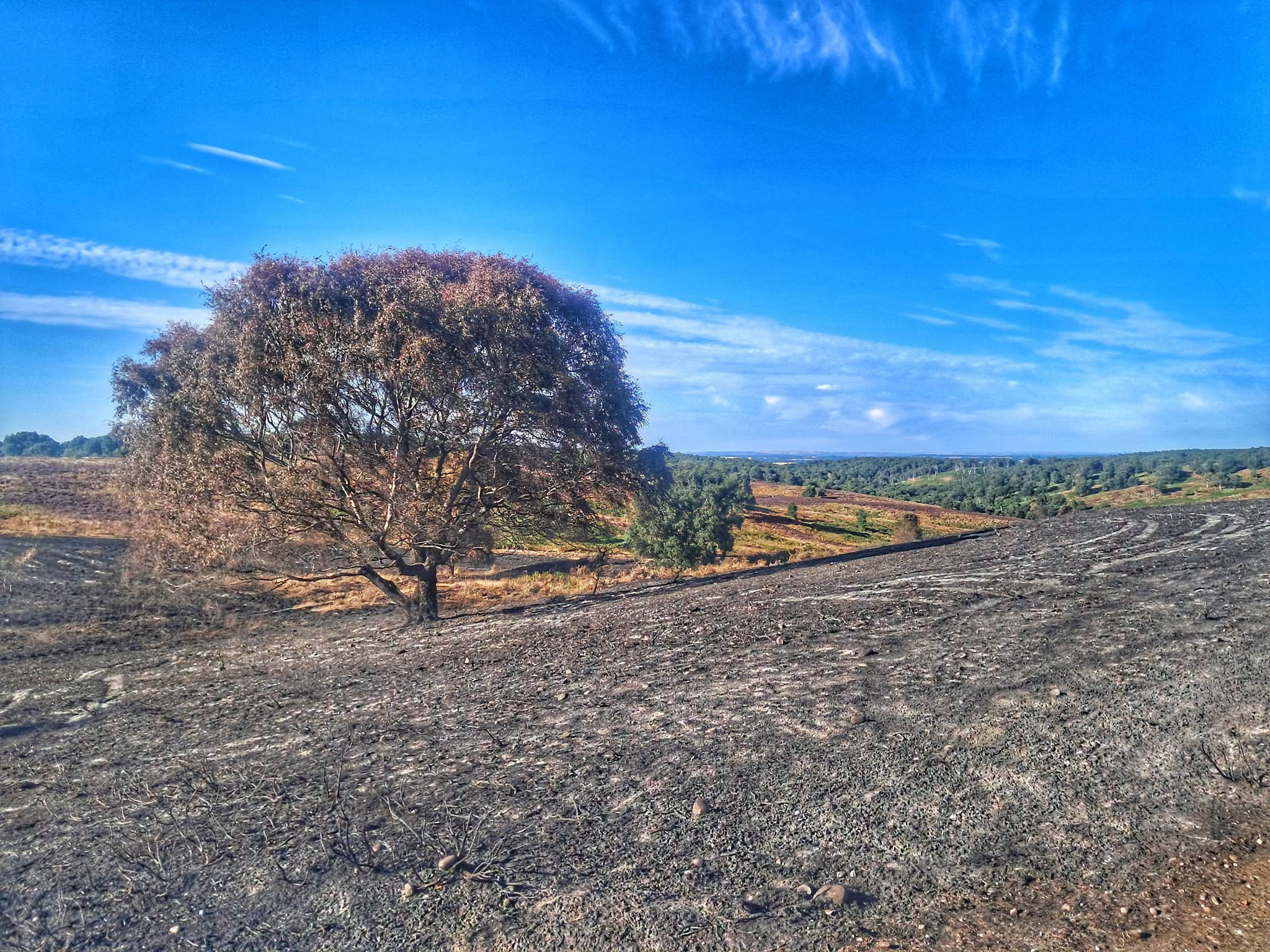
Specialist restoration work is beginning on Cannock Chase after two wildfires damaged around 15 hectares of internationally rare heathland in the Sherbrook Valley area.
Staffordshire County Council says the two fires affected an area equivalent to around 22 football pitches and had a significant impact on wildlife and the heathland habitat. From 1 September, specialist heather-cutting work will begin, with material collected from other parts of Cannock Chase and spread across the burnt ground to help reintroduce heather seeds.
The aim is to give the damaged habitat the best possible chance of recovering naturally, although the council has warned that the effects of the fires could last for years.
Two serious fires within a week
The first of the two fires broke out on Thursday 30 July, when firefighters were called to Sherbrook Valley at around 6pm. Around a football pitch-sized area of heathland was scorched and Chase Road was temporarily closed while crews damped down hotspots. Staffordshire County Council later confirmed that the fire had been caused by a disposable barbecue.
Less than a week later, a much larger fire broke out on Wednesday 5 August. Staffordshire Fire and Rescue Service was called at around 2.30pm, with 15 crews working at the height of the incident to surround the blaze and prevent it spreading further.
The second fire destroyed around 21 football pitches of heathland, with council rangers continuing to damp down hotspots for several days afterwards. The cause of that fire was not known at the time of the council’s later update.
Why the heathland needs help to recover
The fires left a layer of ash across parts of the site, changing the condition of the soil.
Although nutrient-rich soil might sound beneficial, heathland plants such as heather are adapted to poorer, sandy soils. Staffordshire County Council says the additional nutrients could instead encourage faster-growing plants such as bracken, making it harder for heather to return naturally.
The restoration work will therefore involve cutting heather from unaffected parts of Cannock Chase and spreading it across the burnt areas. This should help introduce seeds back into the damaged ground and support the recovery of the rare heathland habitat.
Wildlife lost in the fires
The fires also had a serious impact on wildlife.
During surveys of the affected areas, council staff found bird nests and eggs as well as reptiles, including adders and small lizards, that had not survived the fires. A deer antler was also found shattered by the intense heat and has since been placed on display at the visitor centre.
The earlier fire at the end of July was also known to have killed reptiles and amphibians, including adders and toads.
Cannock Chase contains nationally and internationally important heathland habitats, with parts of Sherbrook Valley designated as both a Site of Special Scientific Interest and a Special Area of Conservation. The council has repeatedly urged visitors not to use disposable barbecues or open fires on the Chase because of the risk they pose during dry conditions.



Leave a Reply